PH to face more super typhoons in future amid climate change, expert warns
 Tomas Kauer - News Moderator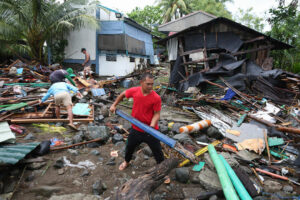
Amid the worsening effects of climate change, the Philippines may experience fewer tropical cyclones, but Super Typhoon–category storms are more likely to develop in the coming decades, an expert said on Monday.
Rafaela Jane P. Delfino, assistant professor at the Institute of Environmental Science and Meteorology at the University of the Philippines Diliman, made the statement, citing the findings of various studies.
Among these are simulations from the Philippine Atmospheric, Geophysical and Astronomical Services Administration (PAGASA) that compared historical storm data from 1971 to 2005 with future projections from 2036 to 2065.
Most of the models showed that the country is likely to experience a steady or even decreased number of tropical cyclones. However, the likelihood of stronger typhoons is higher.
“In terms of the number of typhoons, either stable or decreasing… Pero yung mga mas malakas na bagyo mas dumadami sila [But the stronger storms are increasing],” Ms. Delfino said during her presentation at the 161st National and 76th Meteorological Day press conference.
The Philippines currently averages 20 tropical cyclones per year.
Ms. Delfino said that this trend has already been occurring in recent years, citing findings from PAGASA.
But what is particularly concerning, she said, is the increase in the number of super
typhoons that develop in or enter the Philippine Area of Responsibility (PAR) in the same period.
The annual average of super typhoons entering the PAR increased from 1.5 per year between 1993 and 2002 to three per year between 2003 and 2020—a more than 100% increase.
Super typhoons are the highest tropical cyclone category in the Philippines, with maximum sustained wind speeds exceeding 185 kilometers per hour.
At this level, PAGASA hoists Storm Signal No. 5 in affected areas, as winds can pose an extreme threat to both life and property.
Tropical cyclones such as Haiyan (locally Yolanda), Goni (Rolly), and Rai (Odette) were classified as super typhoons, known for their devastating effects.
Ms. Delfino also said that rainfall associated with tropical cyclones has increased by 6–7% in recent studies compared to pre-industrial times and is projected to rise by up to 16% in the future.
What causes this? Ms. Delfino explained that human activities, such as increased emissions of carbon dioxide and other greenhouse gases, have contributed to global warming, accelerating climate change and its impacts, particularly over the past 200 years.
She added that warmer waters further induced by man-made activities make tropical cyclones stronger, increase their size, and contribute to rapid intensification, making storms more devastating.
“This leads to significant damage and loss of life and, more often than not, hinders sustainable development,” Ms. Delfino said.
Natural hazards, such as typhoons, cost the Philippines about 0.5% of the country’s gross domestic product (GDP) per year, with losses reaching almost 4.5% of GDP in 2013 due to Super Typhoon Haiyan, according to the Organisation for Economic Co-operation and Development (OECD) 2026 report.
Extreme weather events also have lingering economic effects, cutting local economic activity by up to 2.2% immediately, with 1.7 percentage points of the impact still felt five years later, even after post-disaster adaptation, relief, and reconstruction efforts.
Without climate change mitigation, the Philippines could see GDP losses of around 5% by 2040 and up to 18% by 2070 compared with a scenario without climate change, the report also said.
Meanwhile, the World Meteorological Organization (WMO) on Monday warned that Earth’s climate system is more out of balance than ever in recorded history, as greenhouse gases continue to warm the atmosphere and oceans and accelerate the melting of ice.
WMO said that the years 2015 to 2025 were the hottest 11 years on record, with 2025 ranking among the second and third hottest years at approximately 1.43°C above the 1850–1900 average.
This imbalance increases the risk of extreme weather events, including stronger tropical cyclones, heavier rainfall, more intense heatwaves, and rising sea levels.
The report calls for urgent action, emphasizing the need to cut greenhouse gas emissions and accelerate the transition to cleaner energy.
It also calls for strengthening early warning systems and climate-resilient planning to protect communities and economies. — Edg Adrian A. Eva